
Before you adopt / Allergy guide
Are Maine Coons hypoallergenic?
No. The decision needs more than a coat comparison.
Understand the allergens. Question the promises. Plan for your household before bringing a cat home.
Prepared · General education
Start with the adoption checklist
The direct answer
Maine Coons are not hypoallergenic. All cats produce allergens. Coat length and shedding cannot establish whether a particular cat is suitable for an allergic person. [1]
This article provides general information about human allergies to cats. It does not replace diagnosis or advice from an allergist or other qualified healthcare professional.
If you are considering a Maine Coon and someone in your household has allergies, the useful next step is to discuss that person's symptoms and risks with an allergist before committing to adoption. A promise of an “allergy-friendly” kitten should not decide it for you.
What causes an allergic reaction to a cat?
Cat allergies involve proteins produced by the cat. Fel d 1, a major cat allergen, is found in saliva and skin secretions. When cats lick themselves, they spread it onto their skin and coat. Even hairless cats produce it. [2]
Fur can carry allergens, but counting loose hairs is not an allergy test. Ohio State University's veterinary guidance explains that allergens can travel through the air, settle on bedding and furniture, and move between places on people's clothing. [3]
That distinction matters when choosing a cat. “This cat hardly sheds” describes the visible hair someone notices. It does not establish that the cat is suitable for a person with allergies.
Does a Maine Coon's long coat make allergies worse?
Long hair alone does not establish a higher allergy risk. Allergy organizations advise against using coat length or shedding to judge whether a cat will cause symptoms. [1] [4]
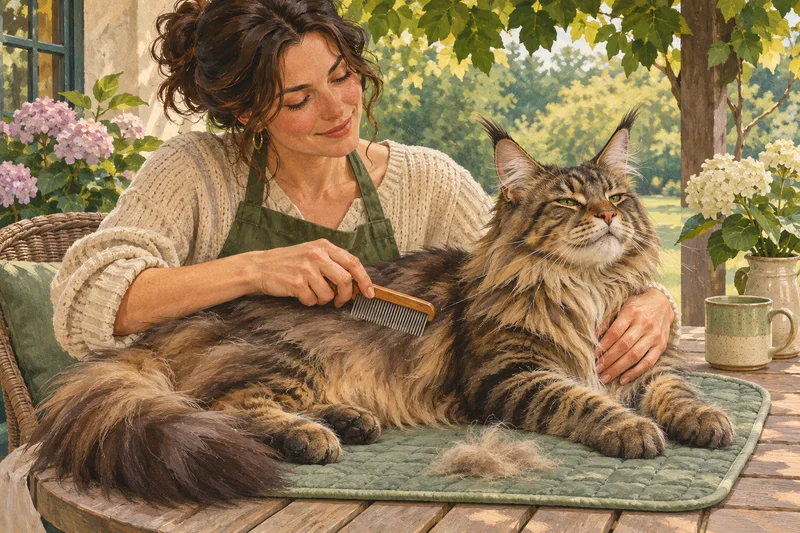
A Maine Coon's coat still needs appropriate care. Keep those decisions separate: choose a grooming routine for your cat's coat and comfort, and discuss your own allergy management with a healthcare professional. Our Maine Coon grooming guide covers brushing and mat prevention.
Neither a thick coat nor a freshly brushed one is proof that a particular cat will be better or worse for you.
Can you react differently to individual cats?
Yes. Ohio State notes that individual cats can produce different amounts of allergens and that a person may react more strongly to one cat than another. That variation does not make any cat allergen-free. [3]
Treat a comfortable visit as an observation, not a medical clearance. The American Academy of Allergy, Asthma & Immunology explains that exposure can cause symptoms soon afterward or contribute to ongoing symptoms. [1]
Before arranging visits or spending more time around cats, ask your allergist what is appropriate for you, especially if you have asthma or a history of breathing symptoms. Do not deliberately provoke a reaction to test a breeder's claim.
Evaluate the claim
Shedding does not reliably indicate whether someone will react. [1]
Symptoms can appear soon after exposure or become ongoing. One visit does not establish long-term suitability. [1]
No cat breed is established as truly hypoallergenic. Ask what the seller means and discuss your circumstances with an allergist. [4]
Before adopting: questions worth answering
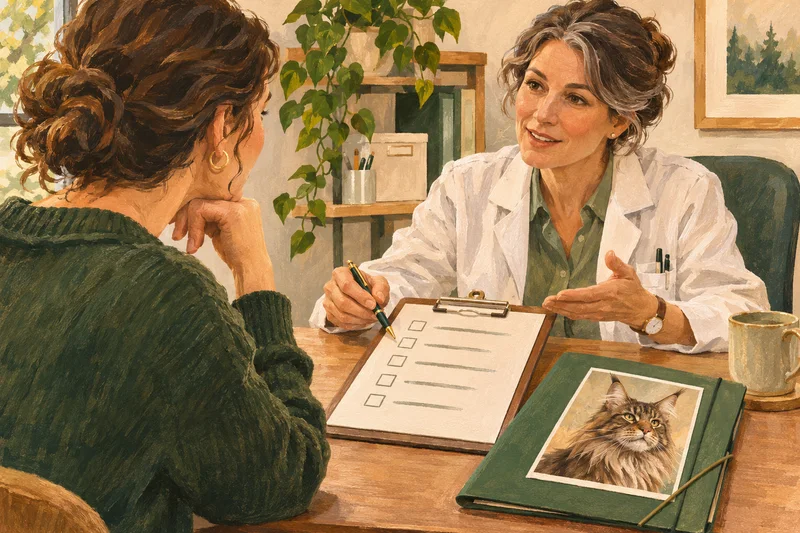
Use this checklist before paying a deposit or agreeing to bring a cat home:
Five things to clarify before a deposit
Tick items as you address them. This is a planning aid, not a medical risk score or clearance for adoption.
An allergist can assess suspected pet allergy and discuss a personalized plan. [1] [4] A breeder can explain their cats and contract, but cannot determine your medical suitability for cat ownership.
For the separate checks on parentage, health records and seller practices, see our guide to choosing a Maine Coon breeder.
If you already live with a Maine Coon
Suspected allergy calls for an assessment, not an automatic decision to give up your cat. An allergist can help identify the cause and discuss options. [1]
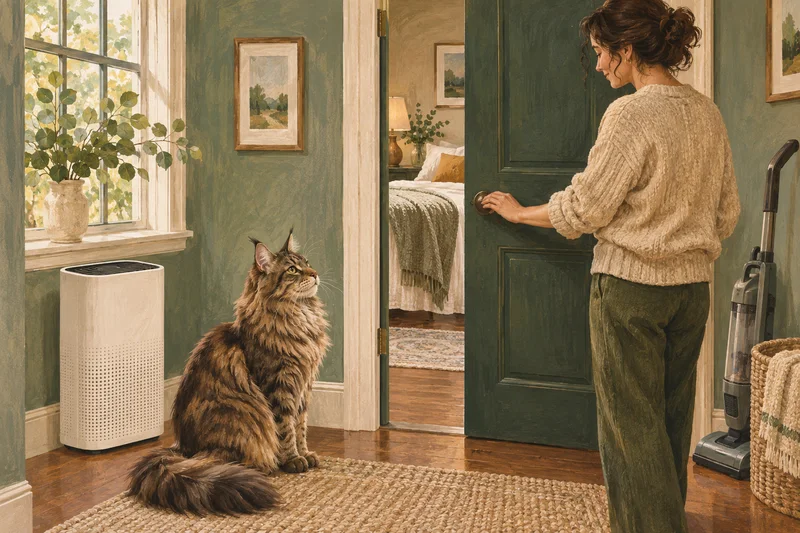
ACAAI lists measures that may reduce exposure, including keeping cats out of the bedroom, washing hands after contact, using HEPA air cleaners, and effective vacuum cleaning. These measures belong within an individual management plan; they do not turn a cat into an allergy-free pet. [4]
Keep your cat's welfare in that plan too. Do not start frequent bathing or change its care routine solely because someone promises an allergy cure. Discuss cat-care changes with your veterinarian.
Frequently asked questions
Can regular brushing make a Maine Coon hypoallergenic?
Is a Maine Coon kitten guaranteed to be safer for allergies?
No. All cats produce allergens. A kitten's age does not provide an allergy-free guarantee or replace an assessment of your own risk. [2]
Will an air purifier prevent a reaction?
Are Maine Coons better for allergies than other breeds?
There is no established hypoallergenic cat breed. Do not choose a Maine Coon on the assumption that its breed makes it safe for an allergic household. [1]