
Getting ready to bring a Maine Coon kitten home? Start with a secure carrier, suitable kitten food, fresh water, an easy-to-enter litter box and a quiet place to settle.
Maine Coons grow, so it helps to think ahead when buying durable equipment. First, though, check that your kitten can use each item comfortably and safely today.
This guide is for general education and does not replace veterinary advice. Contact your veterinarian if you are concerned about your kitten’s health.

What to have ready before pickup
| Essential | What to check |
|---|---|
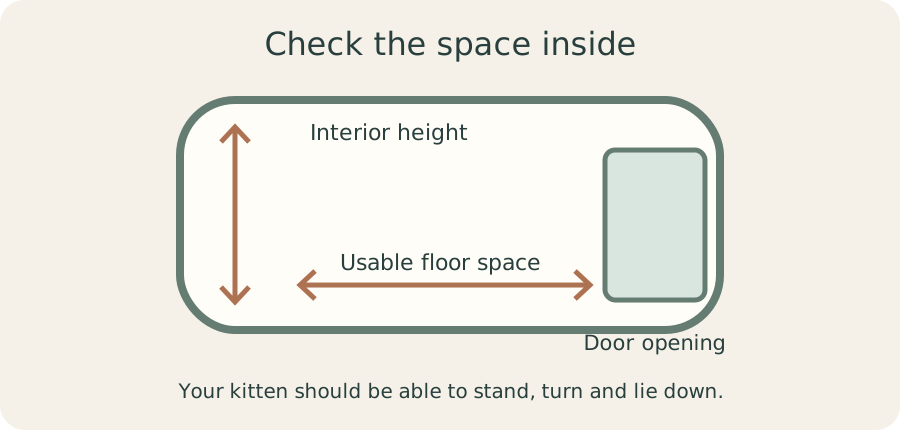
| Carrier | It closes securely, has ventilation and gives your kitten room to stand, turn and lie down. |
| Kitten food | Ask what your kitten currently eats, including the brand, amount and feeding schedule. |
| Food and water bowls | Choose stable, easy-to-clean bowls your kitten can reach. |
| Litter box and litter | Check that the entrance is easy to step over. Ask which litter your kitten already uses. |
| Resting and hiding places | Provide a washable blanket or bed and a safe hiding spot. |
| Scratcher | Choose one that stays stable when your kitten uses it. |
| Vet details and records | Have your vet’s contact details and collect any available health records. |
A suitable comb, a few supervised-play toys and extra scratching surfaces are useful during the first week. A large permanent cat tree or an automatic feeder can wait until you know what suits your kitten and home.
Prepare a quiet starter room
Choose a calm room where your kitten can settle before exploring the rest of the house. Place the litter box somewhere easy to find, put food and water away from it, and add a resting place and safe hiding spot. Check windows, cords, small objects and gaps where a kitten could become trapped. Remove plants or household items unless you know they are safe around cats. Keep other pets out initially.
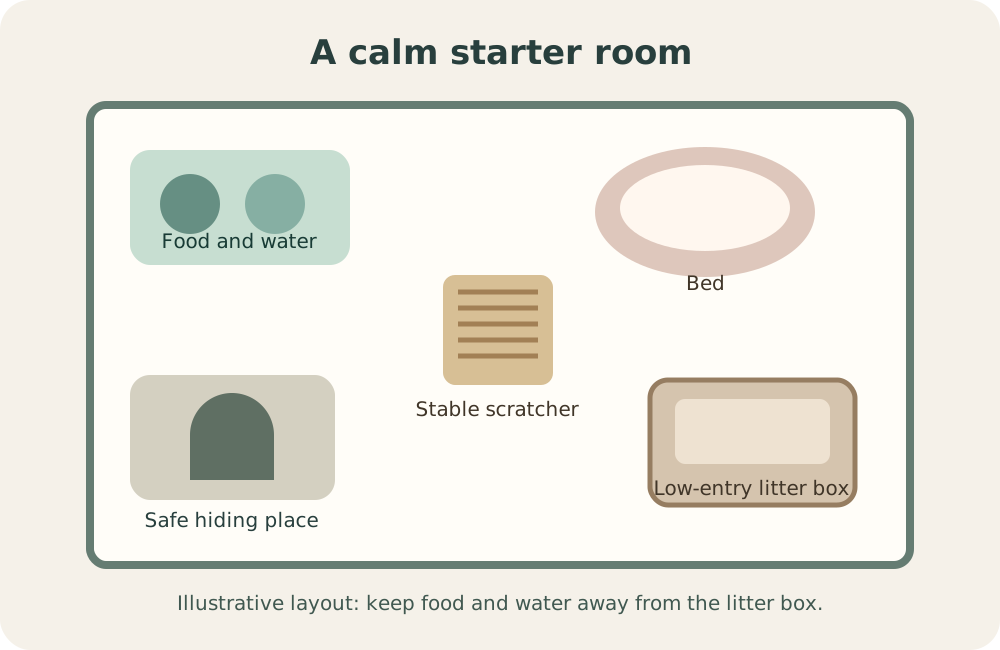
Ask the breeder or rescue which food and litter the kitten knows. Cats Protection recommends using familiar food and litter where practical.
Pickup day and the first week
| When | What to do |
|---|---|
| Before leaving | Check the carrier fastening. Collect available vaccination, parasite-treatment, feeding and veterinary records. |
| On arrival | Take the closed carrier into the prepared room, open it and let the kitten come out at their own pace. Make food and water available and show them the litter-box location. |
| First night | Keep the room quiet and check on your kitten without forcing interaction. Notice whether they eat, drink and use the litter box. |
| Next few days | Keep a steady routine. Offer gentle play and let the kitten approach you. |
| As confidence grows | Introduce another safe area for short periods, allowing the kitten to return to their starter room. Arrange or attend a vet visit. |
There is no fixed day when every kitten will be ready for more space. Look for comfortable exploration and use of the room’s resources. If your kitten is not eating or seems unwell, contact your vet promptly for advice.
Choosing equipment for a growing kitten
Litter box: Check the entrance height first. As your cat grows, check whether they can turn and dig comfortably. See our litter-box sizing guide.
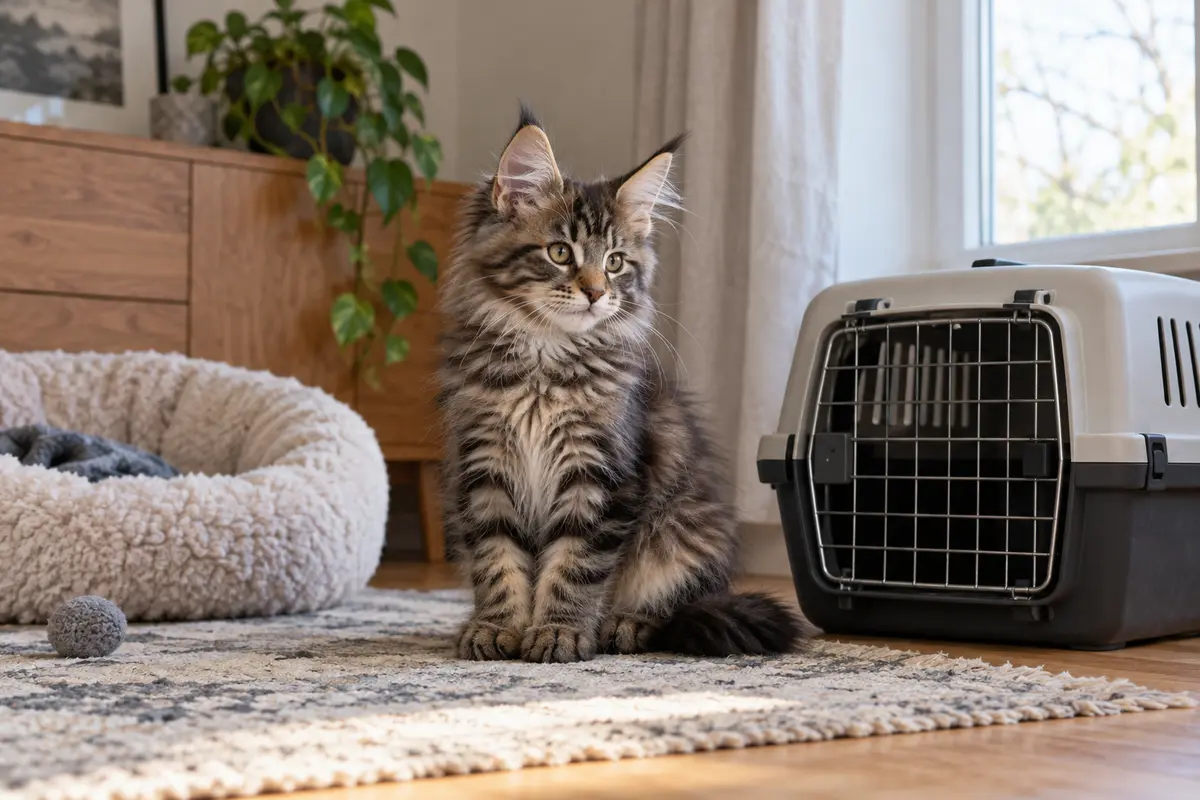
Carrier: Check the usable interior dimensions and the manufacturer’s weight limit. Room for growth is helpful, provided the kitten can travel securely now.
Cat tree: Choose stable equipment with platforms and routes down that a small kitten can use safely. Check usable platform size and base, not just advertised height. Our cat-tree guide explains fit checks.
Introducing another pet
Keep your kitten and resident pet separated initially, with each able to reach their own food, water and resting places. Start by allowing them to become familiar with each other’s scent. Progress gradually to controlled visual contact and short, supervised meetings when both are comfortable. Give each animal a way to move away, and slow down if either becomes distressed.
Introductions can take weeks. Ask your veterinarian or a qualified behaviour professional for help if you are unsure how to proceed. See Cats Protection’s introduction guidance.
Start grooming gently
When your kitten is relaxed, let them investigate the comb or brush. Try a few gentle strokes, reward calm behaviour and stop before they become uncomfortable. You can build the routine gradually.
If you find a tight mat or an area that seems painful, ask a professional groomer or vet for help. For ongoing coat care, see our grooming guide.
When to contact a vet
Contact your vet promptly if your kitten is not eating, seems unusually quiet, has diarrhoea or shows another change that concerns you. Explain their age, what you have noticed and when it started.
Seek urgent veterinary care for breathing difficulty, collapse, severe distress or inability to urinate. A kitten with diarrhoea accompanied by lethargy, refusal to eat, vomiting or blood in the stool also needs prompt veterinary attention. See VCA’s guidance on kitten diarrhoea.
Questions new owners often ask
Should I change my kitten’s food immediately?
Ask what your kitten already eats and take the food name, portion and schedule to your vet. Discuss any change before making it.
Do I need to buy adult-sized equipment now?
No. Your kitten needs to reach and use their supplies safely today. Consider future growth for durable purchases and reassess the fit as your cat grows.
How long should my kitten stay in the starter room?
There is no fixed timetable. Observe their comfort and use of food, water and the litter box, then introduce more space gradually. Ask your vet if you are concerned.
Still choosing a seller? Use our Maine Coon breeder checks before paying a deposit to review identity, records and written terms.