
That sounds straightforward until you find a kitten you already want. The photographs look convincing, the breeder seems friendly, and someone else is supposedly ready to reserve it.
At that point, it helps to have a process you decided on before becoming attached. This guide walks through the checks, the follow-up questions and the circumstances where pausing is the sensible choice.
This article provides general educational information. A veterinarian can help interpret health records; questions about contractual rights may require qualified legal advice. Photographs illustrate the subject and do not document breeders we have inspected or endorsed.
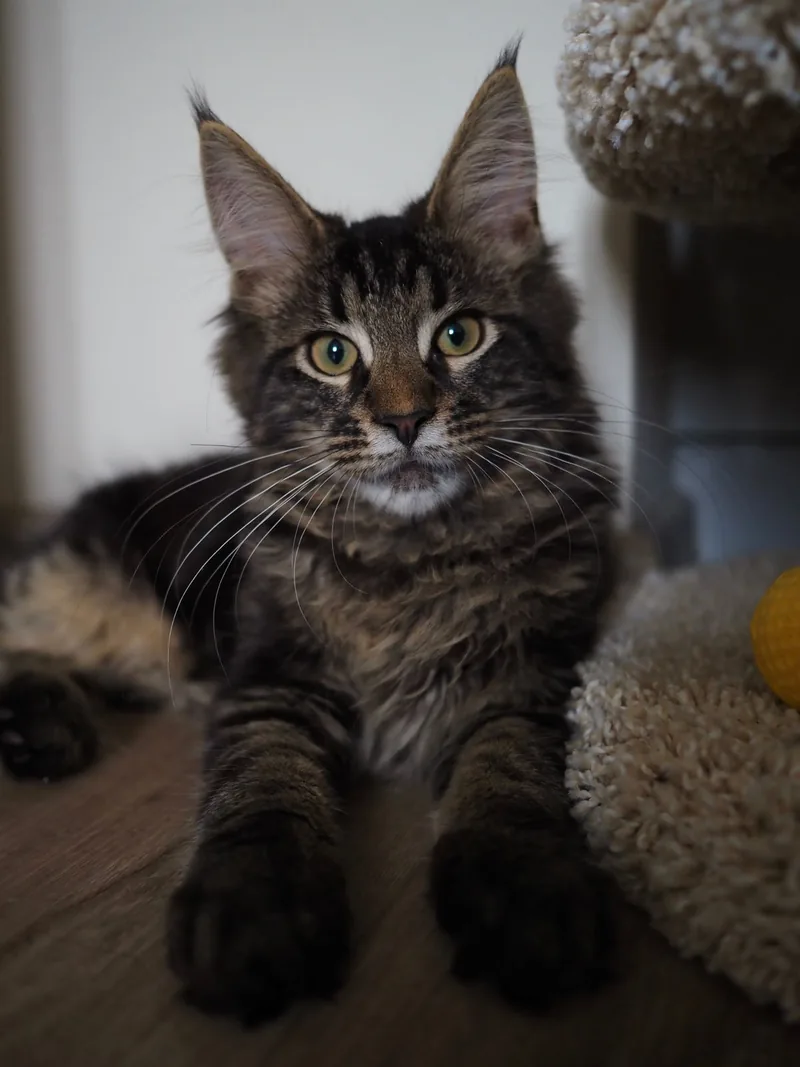
Separate three checks that a breeder’s website may blur together
When someone advertises a “registered, health-tested Maine Coon,” ask what each part means.
| Check | What you are trying to establish | What to request |
|---|---|---|
| Seller identity | Who is offering the kitten? | Breeder’s name, cattery name and consistent contact details |
| Registration | What registration documents will accompany this kitten? | Association name, available documentation and the process for receiving papers |
| Health information | What examinations or screening have actually been completed? | Relevant records with the animal’s identity, dates and the examination or test performed |
CFA handles cattery names, litter registration and individual-cat registration through distinct processes. Ask about the kitten’s paperwork specifically rather than assuming a registered cattery name answers every question.
For example, follow “We are registered” with:
“Which documents will I receive for this kitten, when will I receive them, and are there any conditions I need to complete first?”
Write down the answer. Compare it with the agreement before paying.
Establish who you are dealing with
Record the breeder’s full name, cattery name, location, phone number and website. Then check whether those details remain consistent across your conversations and documents.
The FTC recommends searching a seller’s name alongside words such as “review,” “complaint” and “scam.” Use that research to identify questions requiring explanation rather than treating either praise or criticism as a complete verdict.
If the payment recipient has a different name from the person in the agreement, ask why before proceeding. Keep the explanation with your purchase records.
TICA’s buyer guidance also recommends references and independent research. Its own warning makes clear that buyers still need to exercise caution when contacting catteries through listings.
A useful reference conversation goes beyond “Were you happy?” Ask whether the documents arrived as promised, collection arrangements matched the agreement and the breeder remained available afterward.
Arrange a conversation about the actual kitten
Ask to meet the kitten where practical. If that is not possible, arrange a live video conversation showing the kitten being offered.
A useful request is:
“Could we arrange a short video call so I can see this kitten, ask about its routine and understand the collection arrangements?”
CFA acknowledges that breeders may limit visits to their homes. It recommends looking for a willingness to provide photographs, updates and video contact instead. A restricted visiting policy and a refusal to provide any meaningful evidence are different situations.
During the call, ask which kitten you are seeing and how it connects to the photographs and agreement. If several kittens look similar, ask how they are identified.
Use the call to continue your checks. It does not replace the written records.
Replace “Are the parents health tested?” with specific questions
A yes-or-no answer leaves too much unexplained. Ask:
- Which parent was examined or tested?
- What examination or test was performed?
- When was it completed?
- Can you receive the relevant report?
- Does the report identify the same animal named in the pedigree information?
TICA advises requesting parental health and genetic records. When the paperwork is unfamiliar, ask your veterinarian what it establishes and what questions remain.
Keep the kitten’s records separate from parental screening information. Ask what veterinary care the kitten has received and which records will accompany it home.
CFA recommends asking about vaccination history, veterinary checks and health guarantees. It also cautions that a breeder cannot promise a kitten will never develop a health problem.
The useful outcome is a clear account supported by documents, with uncertainty acknowledged.
Find out how this kitten has been raised
Ask questions that help you picture an ordinary day:
- Where does the kitten spend most of its time?
- How does it respond when you handle or groom it?
- What does it do when unfamiliar people enter the room?
- Has it lived around other cats, children or dogs?
CFA’s buyer guidance includes the kitten’s upbringing, individual personality, feeding routine, litter habits and experience with scratching posts. These subjects help you prepare for the move as well as evaluate the answers.
Avoid asking for a promise that a Maine Coon will always enjoy being carried or instantly accept another pet. Ask what the breeder has actually observed about this kitten.
Read the deposit terms before choosing a payment method
Start by asking what the deposit reserves: a named kitten, a place on a waiting list or a future choice from a litter.
Then work through the agreement:
| Situation | Question to settle before paying |
|---|---|
| You change your mind | Is the deposit refundable, transferable or retained? |
| The breeder cannot supply the kitten | What happens to the deposit? |
| Collection is delayed | What arrangements apply? |
| A health concern arises before collection | What options does the agreement describe? |
| A problem is identified afterward | What evidence, notification and deadlines are required? |
This is a review worksheet, not a statement of what every agreement must provide.
CFA notes that a reservation deposit can be part of a kitten purchase and advises buyers to ask about refund conditions. TICA recommends reading and entering into a written agreement.
Hypothetical example: a seller says your deposit is refundable if they cancel, but the agreement describes every payment as nonrefundable. Ask for the inconsistency to be resolved in the written terms before paying.
For the complete financial commitment beyond the deposit, use our Maine Coon ownership-cost guide.
Recognize when another payment is not the answer
The FTC warns about pet sellers who demand payment through gift cards, cryptocurrency or wire-transfer services. It also describes pressure to pay quickly for an animal advertised online.
Pause if:
- The seller repeatedly avoids showing the kitten.
- Basic identity or paperwork questions remain unanswered.
- Written terms conflict with the promises made to you.
- You are pressured to pay before completing your checks.
These are reasons to stop the transaction and investigate further. They are not a basis for publicly accusing a named person without evidence.
Make the decision with the unanswered questions in front of you
Use three outcomes:
Proceed: you can identify the seller and kitten, have reviewed the available records, and understand the written terms.
Pause: a specific document, explanation or arrangement is still outstanding. List exactly what you need.
Walk away: the seller will not address essential questions or insists that payment must come first.
You do not need to prove someone is dishonest to decide you are uncomfortable proceeding.
Once the breeder checks and collection arrangements are settled, use our Maine Coon kitten checklist to prepare the carrier, starter room and first-week routine.
Frequently asked questions
How can I verify a Maine Coon breeder is legitimate?
Check that the breeder’s name, cattery details and payment recipient match the information in the agreement. Ask to see the actual kitten in person or during a live video call, request records and speak to references. Treat these as checks that work together. A polished website or a registration claim alone is not enough.
Does registration guarantee a healthy kitten?
No. Registration paperwork and health records answer different questions. Ask which registration documents you will receive for your kitten, then separately review its veterinary records and the available parental screening reports. Registration should not replace those checks.
What health records should I request before paying?
Request the kitten’s available veterinary and vaccination records, plus the parental health and genetic screening reports the breeder refers to. Check the animal’s identity, date and examination or test listed on each report. If you cannot interpret a result, ask your veterinarian what it establishes before committing.
Is a nonrefundable kitten deposit a warning sign?
Not by itself. First establish what the deposit reserves and what happens if you cancel, the breeder cannot supply the kitten or collection is delayed. Ask for any conflict between spoken promises and written terms to be resolved before paying. If you do not understand or accept the terms, pause the purchase.
What should I do if a breeder refuses home visits?
Ask whether they offer a live video call showing the kitten, regular updates and clear collection arrangements. A restricted home-visiting policy is different from refusing all meaningful contact. If the breeder also avoids showing the kitten or answering basic questions, do not let pressure to reserve it rush your decision.
Sources and photograph credits
Sources reviewed October 31, 2026. This is a research-based guide, not a breeder directory or certification service.
- TICA: Pet Buyer’s Guide
- CFA: Registration Overview
- CFA: Could This Kitten Be a Scam?
- CFA: Finding the Purr-fect Pedigreed Kitten
- FTC: Getting a pet? Avoid scams
All three photographs are credited above and used under the Pexels License. No AI-generated images are used in this article.