
A cat looks almost black in one photograph, then much lighter around the neck in another. The breeder calls it black smoke. Is that a different color, a trick of the lighting, or simply a black cat with a pale ruff?
The useful distinction is in the coat itself. Black smoke describes a pale undercoat beneath deeply colored hair tips. A portrait may show the overall appearance, but it often leaves that detail hidden.
If you’re comparing kittens or trying to understand a coat description, start with what the name means. Then ask whether the photographs actually show the feature you’re looking for.
What does black smoke mean?
The Cat Fanciers’ Association’s Maine Coon standard describes black smoke as a white undercoat beneath deeply black-tipped fur. It also notes that the cat may appear black at rest, with the pale undercoat becoming more apparent in motion or when the fur is parted.
That explains why one full-body photograph may be more helpful than another. A photo of the cat sitting still can show its dark outer coat without clearly revealing the pale base of the hairs.
For a reader learning the term, the important point is the contrast between the underlying coat and the darker tips. There is no need to assign an exact percentage of black and white to every hair.

Black smoke, solid black and silver tabby compared
These names describe different coat appearances. A dark photograph is not enough to make them interchangeable.
| Coat description | Main distinction | Detail worth looking for |
|---|---|---|
| Solid black | CFA describes the black color as extending from the roots to the tips, without a smoke undercoat | A clear view of the coat, not just its dark silhouette |
| Black smoke | Pale undercoat beneath deeply black-tipped hairs | A view that actually reveals the underlying fur |
| Silver tabby | Dark tabby markings over a pale ground | Visible body markings as well as the lighter background |
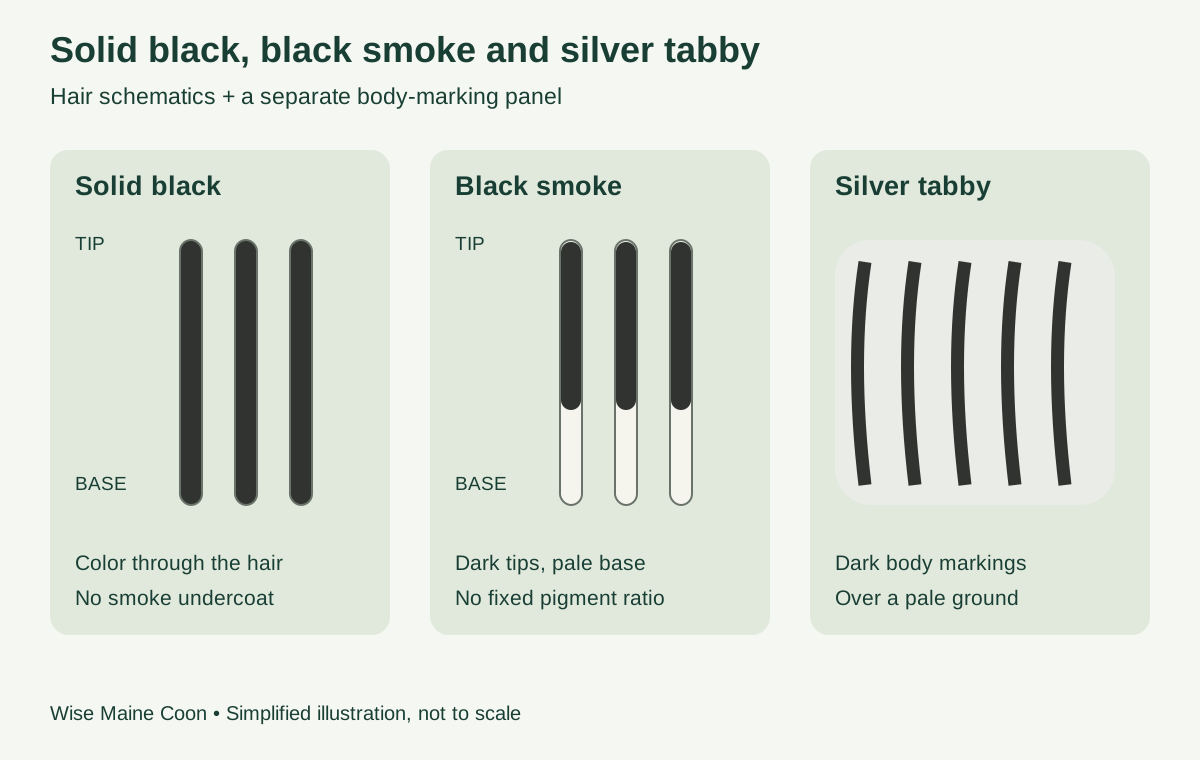
The comparison gives you a way to read a description. It does not turn a distant or poorly lit photograph into a reliable identification tool.
If the image leaves the relevant detail hidden, the sensible answer is that you need another view.
Why the photograph may not settle the question
Imagine two photos of the same cat. In the first, the cat faces the camera and most of its body is out of frame. In the second, you can see its side and more of the coat.
The second image gives you more information about body markings. Neither necessarily gives you a close view of the hair roots.
Before relying on a picture, ask what it shows:
- Can you see the whole body or only the face?
- Are any tabby markings visible along the sides?
- Does the photograph reveal the underlying fur, or only the outer coat?
- Is the color description supplied by the owner or breeder, and is it also the recorded registration color?
These questions help you separate a useful observation from a guess. They are especially helpful when a listing contains several attractive portraits but no photograph of the detail being discussed.
Is a pale neck ruff enough to identify black smoke?
It can be part of the appearance described in the standard, but don’t use one pale area as the whole test.
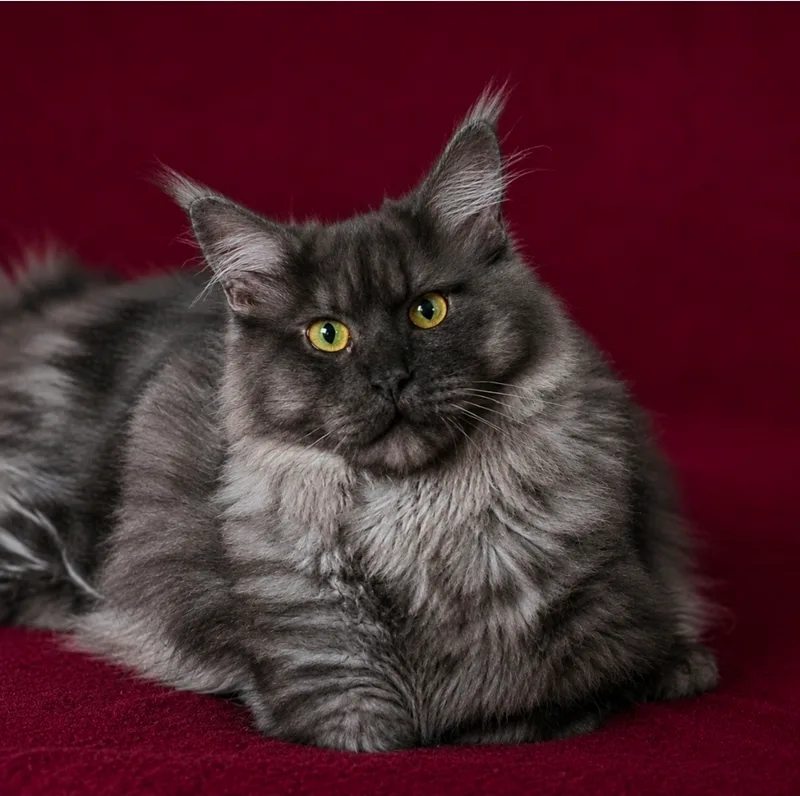
Our selected photograph is labelled as a young black-smoke Maine Coon by its photographer. It shows a dark cat with a lighter ruff. We can use it as a labelled example of overall appearance, while being clear that the picture does not show parted hair roots and we have not reviewed that cat’s pedigree documents.
That distinction also applies to photographs you find elsewhere. A source caption tells you how the owner or photographer identified the cat. It should not be presented as independent verification of every feature in the image.
What about faint stripes on a dark coat?
Faint markings can make a photograph harder to interpret. Avoid jumping from those markings to a new coat label.
The UC Davis Veterinary Genetics Laboratory’s feline coat-color guide notes that tabby patterns can be difficult to identify in non-agouti cats. A few visible lines in a photograph therefore do not, by themselves, settle the cat’s registered color or establish a separate “smoke tabby” classification.
If the label matters, ask the breeder what is recorded and which registry they use. For a pet owner simply learning the terminology, it is enough to acknowledge that the photograph leaves the answer uncertain.
Questions to ask when viewing a kitten
You can keep the conversation simple:
- “What is the full coat description?” Check whether “black smoke” is being used informally or matches the registration description.
- “Could you show me the coat detail that supports that description?” Ask for a suitable photograph rather than another face portrait.
- “Which registry is the kitten registered with?” Use that registry’s terminology when discussing records or showing eligibility.
- “What can you tell me about this individual kitten?” Give its background, socialization and care the attention they deserve alongside appearance.
A helpful breeder should be able to explain the label in ordinary words. You should not have to make a purchase decision from a dramatic photograph and an unexplained color name.
Be careful with rarity and price claims
“Rare black smoke” can sound persuasive in a listing. Before treating it as evidence, ask what the claim is based on.
This guide does not rank Maine Coon colors by rarity. We have not gathered a representative color-frequency dataset, and a few listings would not establish one.
The same applies to price. A breeder’s asking price tells you about that offer. It does not establish a standard US price for every black-smoke kitten or prove that the coat alone justifies a premium.
If you like this appearance, that is a perfectly understandable preference. Keep it alongside the other information you need about the kitten rather than letting the color label carry the whole decision.
Caring for the coat you have
The comparison here explains coat terminology. It is not a reason to invent a special feeding routine or promise a particular personality for a black-smoke cat.
For day-to-day coat care, our Maine Coon grooming guide covers the practical routine. Our care guide covers the wider responsibilities of living with a Maine Coon.
Common questions
Is black smoke the same as solid black?
No. The pale undercoat is the distinction in the black-smoke description. A cat may still look very dark when the outer coat hides that detail.
Is black smoke the same as silver tabby?
No. Silver tabby includes visible tabby markings over a pale ground. Black smoke describes a pale undercoat beneath dark tips. Look for the features relevant to each name rather than relying on the word “silver.”
Will a kitten look exactly like an adult photo?
An adult photo can explain a coat term, but it is not a promise about a particular kitten’s future appearance. Ask the breeder about the kitten and avoid treating a reference image as a forecast.
Does black smoke prove that a cat is a Maine Coon?
No. A coat description does not establish an individual cat’s breed background. Ask about its records if pedigree is important to you.