
You find a kitten you like, then read the breeder’s description: “blue silver classic tabby with white.” The photograph shows a fluffy gray cat. Why does one coat need so many names?
Each word describes a different part of its appearance. Some refer to color, others to markings or the way color sits along the hairs. Once you separate those details, the names become much easier to follow.
This guide explains the main terms you’ll meet while looking at Maine Coon photographs, breeder listings and registration documents. It can help you understand a description, although a photograph alone won’t confirm a cat’s pedigree or exact registered color.
Start with color and pattern
Think of the coat description in two parts: the color you see and the way it appears across the cat.
For example, “tabby” describes markings. It isn’t another name for Maine Coon, and it isn’t one particular color. A coat description can combine a color term with a pattern term, then add details such as white markings.
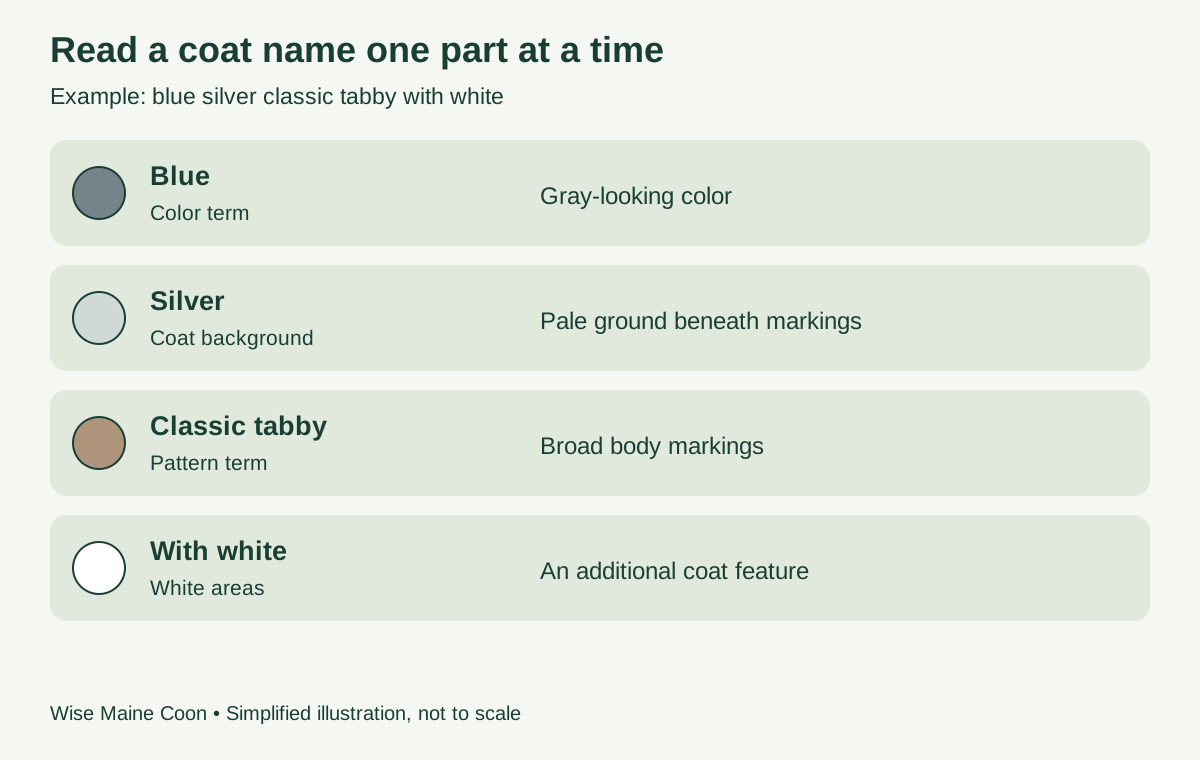
In the example above, you can read the name piece by piece:
- Blue: the gray-looking color term.
- Silver: the pale background beneath the darker markings.
- Classic tabby: the broad, swirling pattern.
- With white: separate white areas on the coat.
You don’t have to memorize a long list of combinations. Start by asking which words describe color, which describe markings, and whether the name includes another feature.
The coat terms you’re most likely to encounter
The Cat Fanciers’ Association’s Maine Coon standard describes solid colors, tabby patterns, smoke and other coat groups. Here’s a short reading guide rather than an exhaustive show-class list.
| Term | What it describes | Useful distinction |
|---|---|---|
| Solid | A coat described as one color | Compare the individual color description before assigning a label. |
| Tabby | Markings across the coat | Classic, mackerel and ticked describe different patterns. |
| Silver tabby | Darker tabby markings over a pale ground | Keep the visible markings separate from the word “silver.” |
| Smoke | Pale undercoat beneath deeply colored hair tips | It can look darker when the cat is still. |
| Tortoiseshell | A combination of black and red color areas | Blue-cream is another combination described in the standard. |
| With white | White areas added to a coat description | This can accompany several underlying colors or patterns. |
Different coat groups at a glance
These photographs illustrate white, red tabby with white, and tortoiseshell descriptions supplied by their sources. They are examples of appearance, not independent pedigree verification or a complete identification chart.
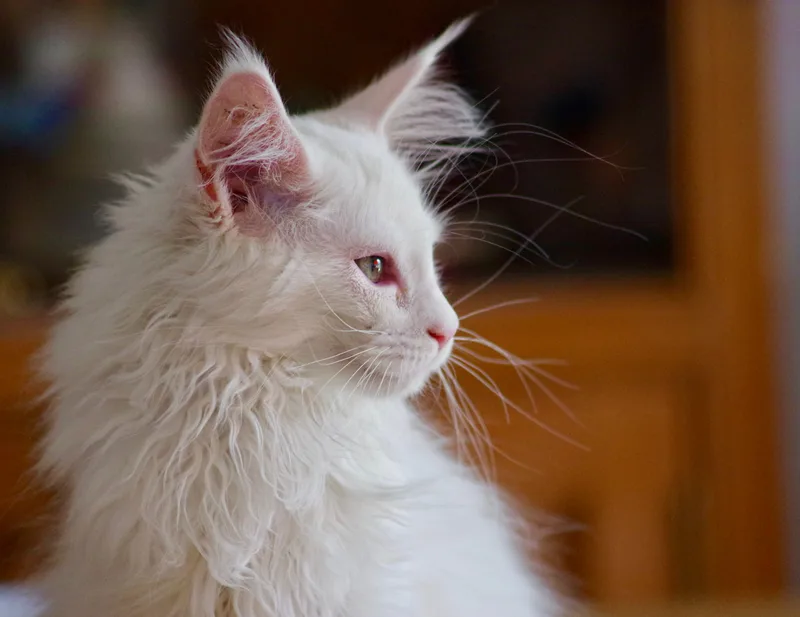
Photo by Yannick Vallée, CC BY-SA 4.0. Resized and converted to WebP; adapted image retains CC BY-SA 4.0.

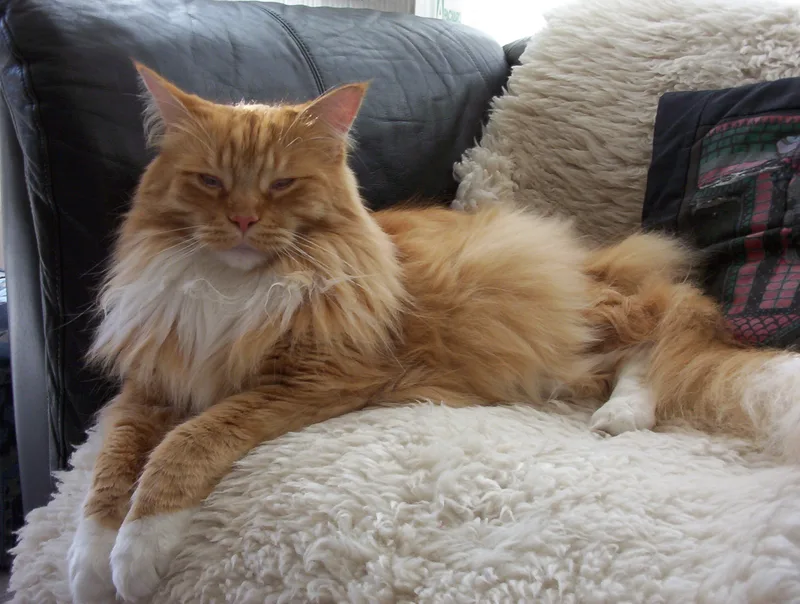
Photo by Nickj, CC BY-SA 3.0. Resized and converted to WebP; adapted image retains CC BY-SA 3.0.

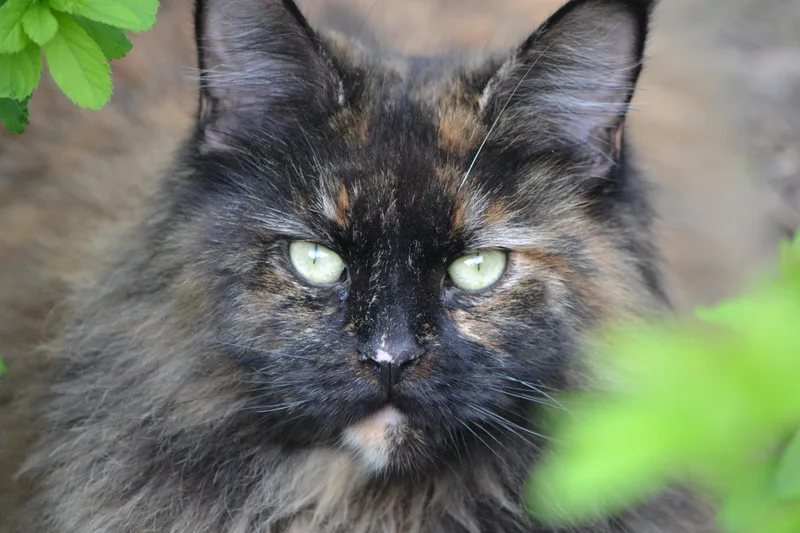
Photo by Cobaltxstrike, CC0 1.0. Resized and converted to WebP.

Smoke is an easy term to misunderstand from a single picture. The pale undercoat may become clearer when the cat moves or the fur parts. A dark portrait therefore gives you less information than a photograph that shows the relevant coat detail.
For tabbies, a side view is particularly useful. It lets you see body markings that a close-up of the face leaves out.
Why a coat can have more than one description
Some differences are simply about everyday language versus registry language. Other differences come from how coat features combine.
The UC Davis Veterinary Genetics Laboratory explains that several genes influence feline coat appearance, including those involved in agouti patterning and dilution. There isn’t one gene that supplies the whole coat name.
For a pet owner, the practical takeaway is modest: one visible feature doesn’t answer every question about the coat. You can describe what a photograph shows without pretending it reveals the cat’s complete genetic makeup.
If a breeder uses an unfamiliar term, ask them to explain it in ordinary words and show where that feature appears on the kitten. That conversation is usually more helpful than trying to match the kitten to the nearest search-result photograph.
Does every registry use the same rules?
No. A coat pattern being described in one standard does not mean the same showing rules apply everywhere.
CFA includes classic, mackerel and ticked tabby in its Maine Coon standard. The Maine Coon section of GCCF’s May 2025 Standard of Points lists classic and mackerel tabby. The Maine Coon Cat Club’s gallery also notes that ticked and spotted Maine Coons cannot be shown in GCCF.
If you plan to show your cat, check the rules of the actual registry involved. If you’re choosing a companion, don’t mistake a difference in show eligibility for a judgment about whether that cat deserves a good home.
A simple way to read a breeder’s listing
Before deciding that a kitten’s coat has a particular name, work through three questions:
- What is the breeder calling it? Ask whether that is an informal description or the recorded registration color.
- What can you see? Look for a clear side view, visible markings and any white areas. For smoke, ask for a photograph that shows the undercoat rather than relying on a face portrait.
- What remains uncertain? If the picture doesn’t show a feature clearly, leave it uncertain. You don’t need to force a label from an unsuitable photograph.
A photographer’s caption can tell you how they identified their own cat. It isn’t the same as reviewing registration records. We use that distinction in our image captions too.
What the color name won’t tell you
A coat name isn’t a substitute for information about the individual kitten: its background, care, socialization and the breeder’s records.
Treat claims such as “the rarest color” or a premium justified only by a dramatic coat as questions to investigate. This guide does not rank colors by rarity or establish what any kitten should cost.
Once the coat terminology makes sense, return to the things you’ll manage at home. Our Maine Coon grooming guide covers caring for the coat, while the size and growth guide helps you think about the space your cat will need.
Common questions
Is tabby a breed?
No. It describes a coat pattern. Calling a cat tabby does not establish Maine Coon ancestry.
Are smoke and silver tabby the same?
They describe different appearances. Smoke refers to the pale undercoat beneath colored tips; silver tabby includes visible tabby markings over a pale ground. A poorly lit portrait may not show enough detail to distinguish them.
How many Maine Coon colors are there?
For understanding your cat’s coat, a single headline number is less useful than knowing which registry and combinations the list covers. Check the named standard, then read the color and pattern terms separately.
Wondering whether your cat has Maine Coon ancestry? Compare physical traits, records and DNA-test limitations before drawing a conclusion.